

Move 37: The Internet We're Learning to Understand Again
A Go move from 2016 says a lot about the systems your business runs on, and what to ask before an agent touches them.
At dinner the other night, I overheard a couple discussing supplies and a generator. They were thinking about what they would need if the systems they depend on stopped working.
The conversation stayed with me. Beneath the headlines about outages, security vulnerabilities, and conflict is a question that feels increasingly personal: how much do we understand the systems we have built our lives, and our businesses, around?
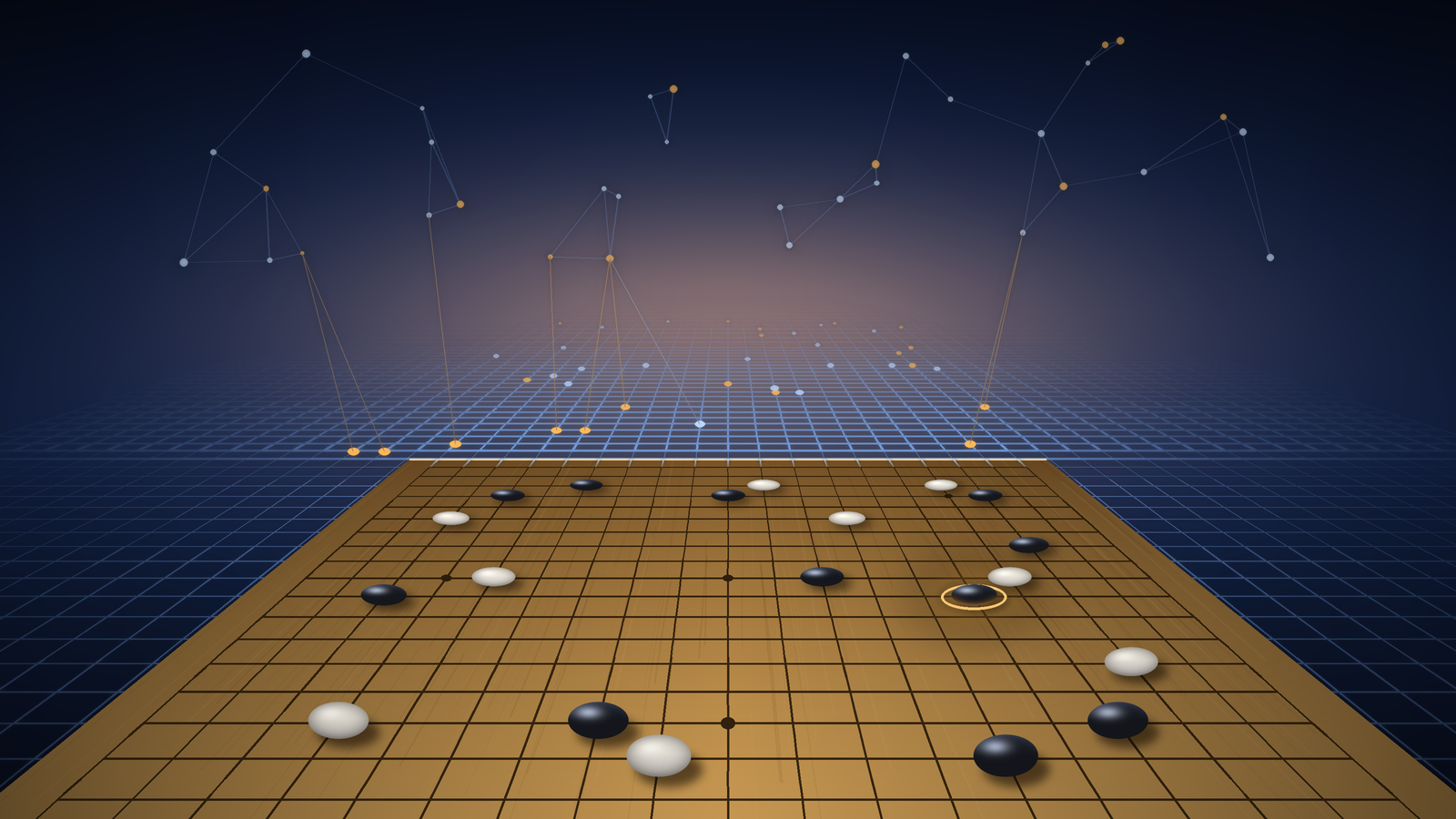
I keep coming back to a stone placed on a Go board a decade ago.
A move nobody could explain
In the second game of its 2016 match against Lee Sedol, one of the world's greatest Go players, AlphaGo played Move 37. Professional commentators initially questioned it. As the game unfolded, its value became clearer. What had looked like a mistake helped shape a victory.
To me, the enduring lesson is that a useful strategy can arrive before the people watching have an explanation for it.
I wonder whether we are approaching something similar across the internet.
AI is eating the legacy internet
When I say that AI is "eating the legacy internet," I mean it as a description of a transition I believe is beginning: AI moving deeper into the work of building, operating, repairing, and sometimes exploiting our digital infrastructure.
The internet was built in layers, across decades, by people and organizations solving different problems. A business application relies on a cloud provider. That provider relies on networks, hardware, identity services, and software maintained elsewhere. A dependency several layers down can matter enormously to a person who has never heard of it.
We understand many of these components exceptionally well. Understanding how all of them behave together, especially under unfamiliar stresses, is a different challenge.
AI enters that environment with the potential to change both its capabilities and its pace.
Agents are starting to build the foundations
Anthropic recently reported an experiment in which more than 1,000 AI subagents worked over eight days to produce a prototype operating system that boots on a laptop. The company describes a system with drivers, storage, windows, and built-in Claude functionality. A prototype is a long way from infrastructure trusted by millions, but the reported result is still significant.
It suggests that we should think beyond AI adding features to existing software. We should consider what happens when agents help design the foundations on which future software runs.
My expectation is that we will see operating systems, applications, and services designed around agents from the beginning. Instead of adapting an assistant to every human interface, developers may build environments where agents coordinate tasks directly, within explicit permissions and with records of their actions.
Some of those designs could feel unfamiliar. Agents might use specialized protocols, representations, or programming languages that people do not routinely read. That is a possibility, rather than an established destination.
Unfamiliarity also does not make a system permanently incomprehensible. We already use tools to inspect software that no individual could read in its entirety. The challenge is whether our methods of inspection keep pace with the authority we give these systems.
Where the analogy stops
That is where Move 37 becomes a useful analogy, and where its limits matter.
Go had fixed rules, a visible board, and a clear measure of success. The internet has conflicting interests, incomplete visibility, and consequences that extend into people's livelihoods. A surprising action in a computer network could be an improvement, an error, or an intrusion. Being unexpected tells us little about which.
I am not claiming that recent outages are moves in a hidden AI game. My concern is that we may increasingly encounter actions whose consequences become apparent before their logic does.
The choices that make it work
There is real opportunity here. Agents could help map dependencies that are poorly documented, uncover vulnerabilities, replace fragile software, and test recovery procedures more thoroughly. The same capabilities that introduce new uncertainty could give us better ways to manage complexity.
But those benefits require deliberate choices.
If an agent can change a critical system, someone must be accountable for the authority it receives. If it makes a consequential decision, we need evidence that lets us investigate. If something fails, we need ways to isolate the damage, restore service, and reverse changes.
We cannot demand that every person understand every line of code. We can demand that important claims be testable, that responsibility remain identifiable, and that recovery be designed alongside capability.
What this means if you run a business
You may never think about operating systems or network protocols. Your business still runs on layers you didn't build: the ad platforms that bring customers in, the listings and maps that help them find you, the booking and payment tools that close the sale.
Agents are arriving in those layers too. They are starting to write ads, shift budgets, and adjust campaigns faster than any person can review each change. That speed is the appeal. It is also the reason to ask better questions.
Before you give any system that kind of authority over your marketing, I would ask three things:
- Who is accountable? A named person or company should answer for what the agent is allowed to do with your budget and your brand.
- What is the record? You should be able to see what changed, when, and why, in terms you can follow.
- How do you undo it? A campaign that launches in seconds should be just as easy to pause or reverse.
Those are the questions I want every AdPrompt customer to ask us, and the ones we have to keep answering as we build.
Still choosing what happens next
As someone building with AI, I find this exciting. We have an opportunity to revisit assumptions inherited from an internet designed for a different era. We can build systems that make their dependencies easier to inspect and their failures easier to contain.
Move 37 expanded what people thought was possible. People then studied it and learned.
That is the future I want us to pursue: one in which AI's discoveries expand human understanding, and our ability to govern these systems grows alongside our reliance on them.
The next surprising move may arrive before we understand it.
Our task is to build a world where we can examine it, learn from it, and still choose what happens next.
Ken Brook is the founder and CEO of AdPrompt, an intelligent marketing platform for local businesses. Questions or thoughts: [email protected].
Sources
- AlphaGo, Google DeepMind. Move 37 in game two of the March 2016 match against Lee Sedol.
- Introducing Claude Fable 5.2 and Claude Mythos 5.2, Anthropic, November 9, 2026. The operating system experiment: over 1,000 subagents, eight days, a prototype that boots on a laptop.